Puppy Development Program
How our puppies are raised — emotional regulation, confidence, safe socialization, handling, grooming preparation, problem-solving, and thoughtful foundations before going home.
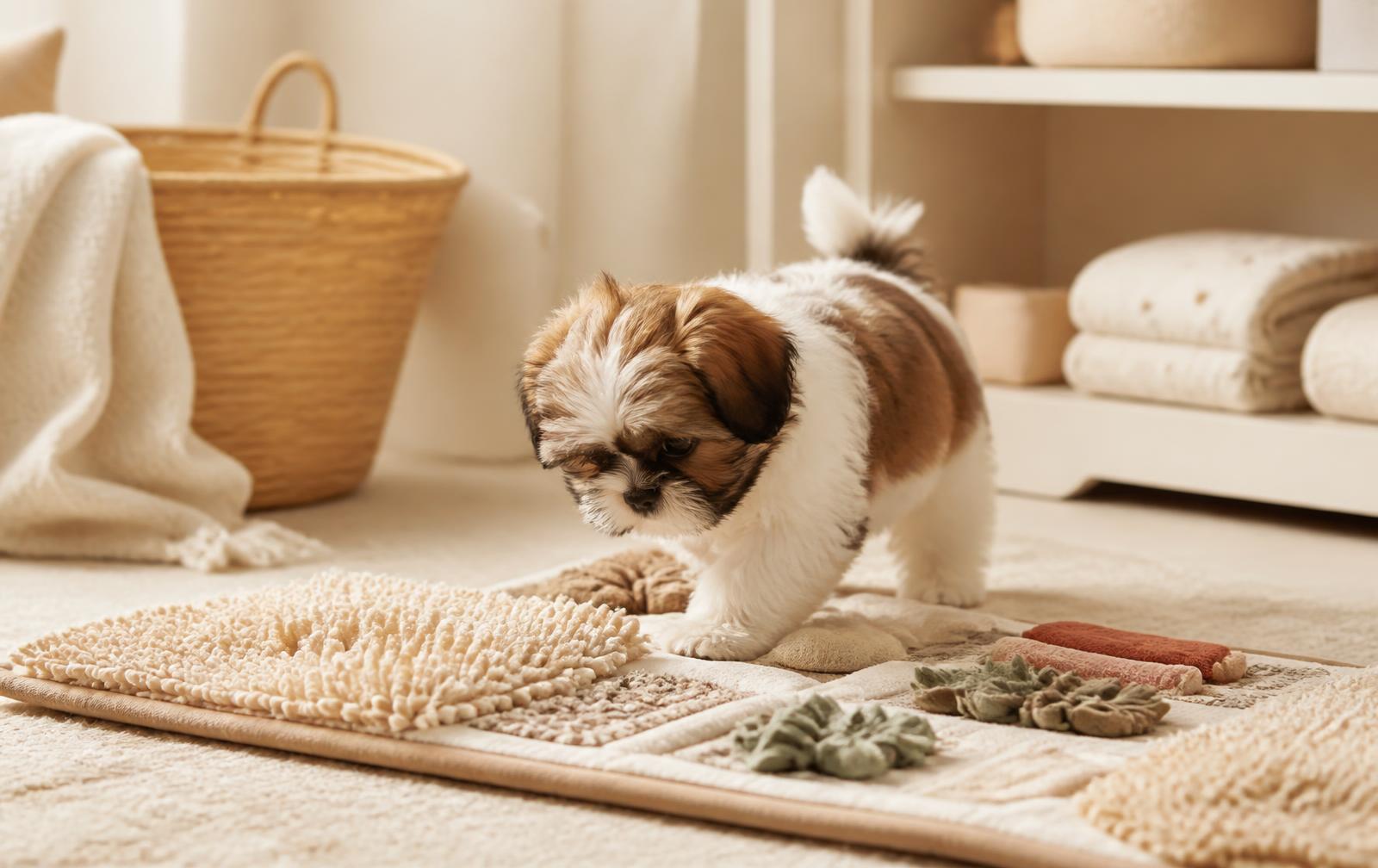
Foundations Before Anything Else
Brain First Shih Tzu puppies are not simply waited on until they are old enough to go home. They are observed, supported, and gently prepared for the world.
Our development work focuses on the things that shape a dog for life: emotional regulation, confidence, recovery from surprise, human connection, safe exposure, grooming preparation, handling tolerance, problem-solving, and early learning.
This is the foundation that future companion homes, therapy or service-style work, and guardian-home partnerships are built on.
- Emotional regulation and recovery from surprise
- Confidence without recklessness
- Safe, age-appropriate socialization
- Handling, grooming, and body-care preparation
- Problem-solving and early learning
- Human connection and handler focus
- Calm exposure to sounds, surfaces, and routines
Connected to Our Guardian Home Standard
Some puppies in our program may be considered especially significant because of temperament, health, structure, emotional stability, trainability, working temperament, family connection, or long-term breed-improvement value.
Those puppies may be considered for guardian homes.
A guardian home is not a casual placement. It is a carefully selected family partnership for a dog whose future may matter deeply to our program.
This is why puppy development matters so much. We are not only raising puppies to be cute, loved companions. We are protecting their brains, bodies, confidence, recovery skills, emotional regulation, and future potential.
We raise strong foundations. We observe each puppy honestly over time, and we protect the dog in front of us — every step of the way.
Brains Are Built, Not Born
A puppy's earliest weeks shape how they meet the world. We use that window with intention — supporting calm curiosity, steady recovery, and gentle handling rather than rushing toward a calendar date.
Our standard puppies are usually not considered ready for transition until around 12 weeks, and smaller or more delicate puppies may stay until at least 16 weeks. Readiness is based on the puppy's maturity, confidence, health, size, stress recovery, and developmental needs — not just a date.
We are not simply keeping puppies longer. We are using those extra weeks with purpose: to build emotional regulation, confidence, handling comfort, safe exposure, problem-solving, and recovery skills before puppies transition into family life.
Creating a Safe Space for the First 72 Hours
A puppy's first safe space matters.
When a puppy enters a new home, they are not just learning new rooms. They are learning new smells, new sounds, new hands, new routines, and new people.
Before we expect confidence, obedience, or social behavior, we want the puppy to understand one simple thing:
"You are safe here."
This video explains why a calm safe space is one of the most important parts of the first 72 hours in a new home.
A safe space is not a punishment area.
It is not isolation.
It is not where the puppy is sent away from the family.
A safe space is a calm, predictable place where the puppy can rest, recover, smell familiar items, settle their nervous system, and begin learning the rhythm of the new home.
For many puppies, this space becomes the bridge between the home they came from and the family they are learning to trust.
The goal is not to hide the puppy from life.
The goal is to give the puppy enough safety to begin life with confidence.
The full Brain First 72-hour transition process, five-sensory support, and family instructions are shared privately with approved families to support the puppy entrusted to them.
Care, Method, and Materials
The Brain First puppy-development process, 72-hour transition guidance, five-sensory support, family instructions, checklists, and training resources represent years of study, observation, and lived experience.
Families who join our program receive these materials to support the puppy entrusted to them, and we walk beside them as their puppy grows.
For details about proprietary materials, certification meaning, guardian agreements, and program terms, please visit our Program Terms & Clarity page.
Learn More About the Pathway
Guardian homes, the Guardian Home FAQ, and the Guardian Home Application are all part of how we protect the dogs we raise.
For program terms, certification language, and proprietary-material details, please visit our Program Terms & Clarity page.